
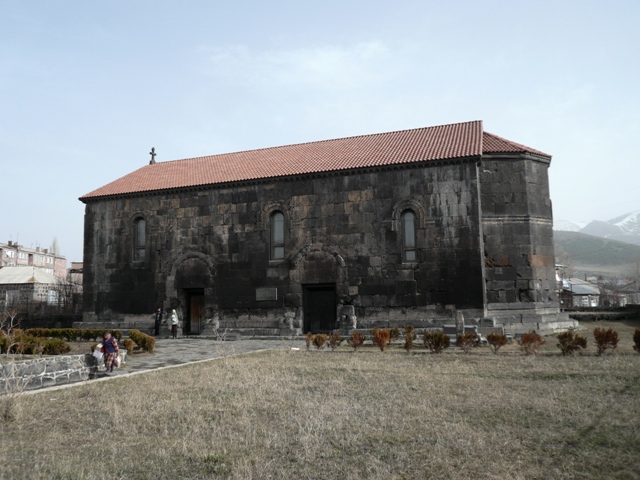
Surb Khach Church in Aparan was built in the IV century. Until the X century Aparan has been called Kasakh, and the church has been called the Kasakh basilica. The toponym “Aparan” and the name "Surb Khach Church in Aparan" started being used in literature since the X century. The area was named Aparan in honor of the palace (palace in Armenian means “aparan (k)”), which was located in the Mija district of the Mokq province, and the Surb Khach Monastery located on its territory, where a particle of the Holy Cross, on which Christ was crucified, was kept. In the X century the relic was transferred to Aparan. In honor of this event, the area was named Aparan. During its thousand-year history, the church has been repeatedly destroyed, but it has survived up to this day.
During the years of the Soviet power, the church has not been used as a place of worship: neither incense has been smoked here, nor prayers have been offered here for about a century.
After gaining independence, the church was renovated by the residents of Aparan. Reconstruction work began in 1992, which was headed by deacon Eduard Frangulyan. The publishing house "Parberakan" (now "Tigran Mets") greatly contributed to the reconstruction of the church: it published Eduard Frangulyan's book "The Bible and We" with a circulation exceeding the planned one by 1000 copies. An income from the sale of the book has been directed by the author to the reconstruction of the church. The residents of Aparan also made financial contribution to the reconstruction of the church.
