Gyumri City tour, Marmashen Monastery and Akhuryan river
0/5
0% of guests recommend
Tour Type
Classic tours
Group Size
20 persons
Location
Gyumri
Overview
- Gyumri center
- Black Fortress in Gyumri
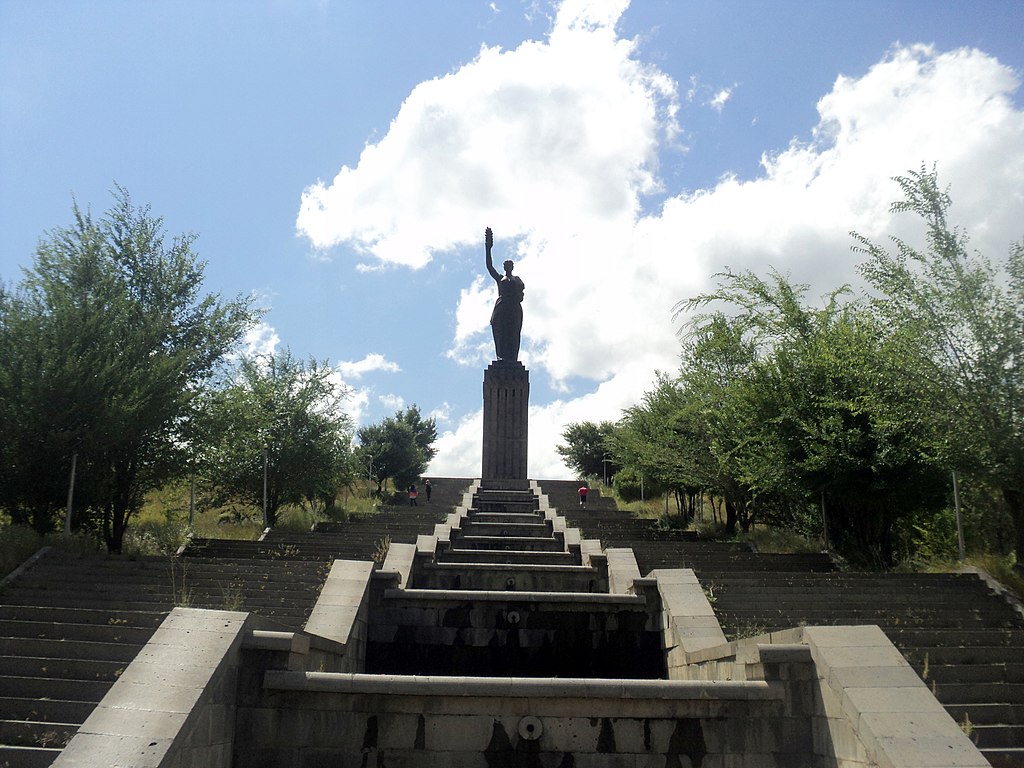
- Statue Mother Armenia
- Marmashen Monastery (10th century)
- Akhuryan river
- Heghnar spring
The first point of our today’s tour is Gyumri city, one of those rare cities that have managed to preserve the spirit of antiquity. The archaeological excavations are evidence of the fact that the first human settlements on the territory of modern Gyumri are dated back to the Bronze Age. In those times it was called Kumayri. In the chronicles of the 8th century BC this area is mentioned as a center of tribes settled in the ancient Armenian territories of Vanand, Shirak and Ayrarat.
Today's Gyumri is a city with low-rise buildings: multi-storey buildings are not being built here after the 1988 earthquake. The city has preserved its old, central part almost untouched. A huge part of the history of Armenia ... Gyumri is rich in churches, which are an integral part of the city and give originality to its architectural view.
The following places can be visited here:
Yot Verk Church, which is also called Surb Astvatsatsin Church (Holy Mother of God). A chapel built by the Kamsarakan princes was located in its place in XVII century, where the image of the “Seven wounds” of the Holy Mother of God was kept, in connection with which the church erected later (1873-1884) in the same place was called Yot Verk (translated from Armenian as “Seven Wounds”).
Surb Amenaprkich Church (Holy Savior) (1858-1872), which is reminiscent of the Ani Cathedral by its architecture. In the courtyard of the church there is a monument “To Innocent Victims, Merciful Hearts” dedicated to the victims of the 1988 Spitak earthquake and the rescuers, who participated in the elimination of its consequences.
The Church of St. Gregory the Illuminator, which is more popular as "Geghtsonts Zham" ("Village Chapel" or "Chapel for Peasants"). It was built in 1870-1980. The church has three chapels and a small bell tower. During the Soviet years, the dome of the church was demolished and it was turned into a warehouse. The church survived the 1926 and 1988 earthquakes.
Abovyan Street (former Aleksandrovskaya), which belongs to the old part of the city. It has preserved the spirit of the architecture of the 19th century and s built up with old, one- and two-storey houses. An old bathhouse, the Puppet Theater, the Academy of Arts, houses where famous people lived are located here.
Varpetats Street, where the museums of poets Shiraz, A. Isahakyan and actor Mher Mkrtchyan are located.
The Gallery of famous Soviet artists sisters Mariam and Yeranuhi Aslamazyan. The sisters founded their own gallery in their native Gyumri in 1987 and donated over 600 of their original paintings, ceramics and graphic works to it. The Gallery of Sisters Mariam and Yeranuhi Aslamazyan stores the great collection of the sisters' works from all the museums of the world. The museum is located in a building of the 19th century, built of black tuff by rich merchants Keshishovs. The building was damaged by the 1988 earthquake, then for many years it served as a shelter for the people losing their houses during the earthquake. The museum was reopened in 2004. Yeranuhi's works are exhibited on the first floor, and Mariam's works are on the second floor. The gallery also exhibits ceramic plates made by Mariam Aslamazyan and pottery made by Yeranuhi Aslamazyan.
The Dzitokhtsyan House-Museum is a museum of folk architecture and urban life of Gyumri. The museum is located in the historical district of Kumayri. The house was built of red tuff famous in Shirak by wealthy merchant Petros Dzitokhtsyan in 1872. The architect came to the decision to build a house on a slope. The eastern part is one-storey, and the western part is two-storey. The building was not damaged after the earthquakes of 1926 and 1988. The Dzitokhtsyans left the city in 1918, since that time the house has served for various purposes: an orphanage for the girls, who lost their parents during the Armenian Genocide in Turkey, was organized here, the police and the district committee of the party were placed in the building in the Soviet times, and people also lived here. The opening of the museum took place here in 1984.
S. Merkurov House-Museum was opened in Gyumri in 1984 in the house, where the sculptor was born. The building was built in 1869 and is a typical example of a merchant's mansion of the 19th century, made of red and black tuff. A carved wooden terrace is attached to the house. The museum building is adjacent to the neighboring building of the Dzitokhtsyan house-museum. The exposition of the museum presents the works of Merkurov, his documents and personal belongings. The author's copies of the death masks of famous people occupy a special place here. Merkurov is an author of more than 300 masks, including the original death mask of Lenin. Among the masks are those of H. Tumanyan, Khrimyan Hayrik, L. Tolstoy, A. Einshtein, N. Krupskaya. Merkurov House-Museum was damaged during the 1988 earthquake, but was restored in 2003.
The Catholic Church Srbots Nahatakats (Holy Martyrs) is located next to the Museum of Folk Architecture and Life of Gyumri. The name of the church is a tribute to the memory of the holy martyrs of the Armenian genocide. The construction work began in 2010 and completed in 2015. Hakob Jivanyan is an architect of the church, and the copper bells were made by sculptor Artush Papoyan. The church has a bell tower, a courtyard and a sacristy in the basement.
The Russian Church of Archangel Mikhail (“Plplan Zham”, which in Armenian means “Shining Church”) is the next sightseeing of Gyumri. The church is a vivid example of a small classical Russian church built of Armenian black tuff. The church shines because of the metallic cover of the roof, hence it received the name “Plplan” (shining). The church was built in the southern part of the city, where there is an old cemetery called Patvi Blur (Honor Hill). The hill has been used as a Christian cemetery, where soldiers were buried, until the beginning of the 19th century,
The next stop will be the Black Fortress, which was once a defensive structure and served as a military prison. A large, round black fortress is located on a hill overlooking Gyumri. The fortress was built in 1834. It had underground communications leading to the location of the current “Mother-Armenia” memorial and the Red Fortress. The fortress became a warehouse of artillery shells after the Russian-Turkish war, in 1877-1878. Today, the fortress is possessed by private individuals and after repairs it will serve as a place of festivals and various international competitions. The “Mother-Armenia” memorial built in 1975 is located nearby.
The last point of our tour is the Marmashen monastery complex (X-XIII centuries) located in the valley of the Akhuryan River. It is one of the best monuments of the Armenian architecture and was an important cultural and religious center of medieval Armenia. Marmashen suddenly opens up to visitors’ eyes, it is not visible from the road. The monastery made of red tuff fits the yellow-green mountainous landscape, and the Akhuryan River serves as a background. The monastery complex consists of the Large and Small (Upper) groups of monuments. Katoghike Church, three unnamed churches, a porch-gavit and a cemetery are within the Large Group. A church and the adjacent cemetery are within the Small (Upper) group of monuments.
«Heghnar Spring» memorial is also located in the territory of complex. The spring has a secret: water will come out of it only if you perform a certain action. If you do not know what action to perform, you will have to wait for a long time. Many people have no patience, so Heghnar remains dry.
We will meet the wonderful sunset on the bank of the Akhuryan River.
Departure: 09:00
Arrival: 22:00
Departure place: Hakob Hakobyan str.1/ near the Mergelyan Institute
Included/Excluded
transport (Sprinter up to 20 seats or Minivan - 8 seats)
guide services
entrance fee to museums/ optional
meals
Direction
Internal
Tour Location
Reviews
0/5
Not Rated
Based on
0 review
Excellent
0
Very Good
0
Average
0
Poor
0
Terrible
0
No Review
from
﷼ 330.873,00
{{start_date_html}}
{{type.desc}}
{{type.display_price}} per person
Extra prices:
({{type.price_type}})
{{type.price_html}}
({{type.price_type}})
{{ type.price }}%
{{ formatMoney(type.price) }}
- {{total_price_html}}
- {{pay_now_price_html}}
You might also like


from
﷼ 330.873,00